
National figures from This Old House (updated April 1, 2026) and Bob Vila (updated July 26, 2024). A written quote after an inspection is the only real number for your house.
Fiber cement siding cost usually runs $5 to $14 per square foot of wall, installed, which puts a typical 1,500 square foot home somewhere between $7,500 and $21,000. That is roughly two to three times the price of vinyl. Where your house lands depends on the style of board, how tall the walls are, how much of the house is brick, and what turns up when the old siding comes off. This guide covers the national numbers, the San Antonio factors, and the downsides worth knowing before you choose fiber cement.
If you already know the walls need work, our siding replacement and repair page explains how a job runs with PCG Roofing.
In this guide
- How much does fiber cement siding cost?
- Cost by style: planks, panels and shingles
- How much for a 2,000 square foot house?
- Fiber cement vs. vinyl siding cost
- What else goes into the price
- The downsides of fiber cement siding
- What goes into a quote from us
- FAQ
How much does fiber cement siding cost?
Most homeowners pay $5 to $14 per square foot for fiber cement siding, installed, according to This Old House, with a national project average of about $14,674. Bob Vila's guide gives a much wider spread, $5 to $25 per square foot installed, and puts a 1,500 square foot home at $27,000 to $30,000.
| Source (last updated) | Installed, per sq ft | 1,500 sq ft home |
|---|---|---|
| This Old House (April 1, 2026) | $5–$14 | $7,500–$21,000 |
| Bob Vila (July 26, 2024) | $5–$25 | $27,000–$30,000 |
Neither guide explains the gap, but This Old House's own breakdown below shows where it comes from: lap planks top out near a square foot installed, while panels reach . A whole-house figure built on panels or shingles lands far higher than one built on standard lap siding.
Cost by style: planks, panels and shingles
Fiber cement comes in a few shapes, and each one installs differently. This Old House breaks it down like this:
| Style | Material only, per sq ft | Material and labor, per sq ft |
|---|---|---|
| Planks (lap siding) | $0.70–$6 | $4.70–$14.25 |
| Shingles | $2–$6 | $9–$22 |
| Panels | $2.50–$15 | $6.50–$24 |
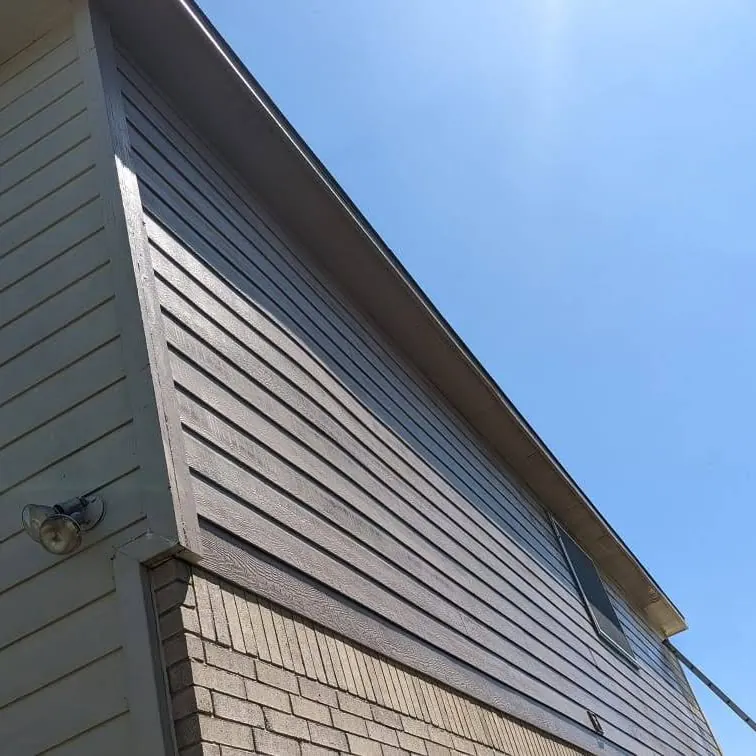
Lap planks are the most common look on houses around San Antonio and the cheapest to install. Shingles and large panels take more cutting and fitting, which is where the labor goes. This Old House puts labor alone at $2 to $8 per square foot, with the high end for multi-story homes and hard-to-reach walls.
How much for a 2,000 square foot house?
It depends less on the size of the house than on the area of the walls that get siding. Siding is priced by the square foot of wall, and that number is not the same as your home's floor area.
- Two stories mean taller walls. A two-story house has more wall area than a one-story house with the same floor area, and the upper walls cost more to reach.
- Brick cuts the siding area. Many homes around San Antonio and Converse have brick or stone on the front or the first floor and siding above or on the other sides. Only the siding counts.
- Windows and doors come out of the total, though trim around them adds work.
To get a rough figure, multiply your siding area by the range. As an example of the math, 1,800 square feet of wall at $5 to $14 per square foot is $9,000 to $25,200. The only way to get the real square footage for your house is to measure it, which is part of our inspection.
Fiber cement vs. vinyl siding cost
Vinyl is the cheaper siding up front. This Old House lists vinyl installation at $2.15 to $5.25 per square foot, against $5 to $14 for fiber cement. Bob Vila's 1,500 square foot comparison puts vinyl at $18,000 to $21,000 and fiber cement at $27,000 to $30,000.
In South Texas, the comparison isn't only about price. Years of strong sun make vinyl brittle, and brittle vinyl is what hail cracks most easily, often at the bottom edge of a panel where it is easy to miss. Fiber cement is heavy and rigid, resists fire, and stands up to sun and impact better than vinyl. The trade-off is that it is painted, so it needs repainting over the years, and it is heavier work to install.
So the real question is how long you plan to stay. A house you will sell in a few years may not earn back the difference. A house you plan to keep through a few more hail seasons is where fiber cement makes its case.
What else goes into the price
The per-square-foot figure is for the siding itself. Several other items show up on a real quote:
- Removing the old siding: $0.70 to $2 per square foot, plus disposal (This Old House).
- Damage underneath: rotted sheathing or framing found once the old siding is off. This Old House puts dry rot repair anywhere from about $100 to $25,000.
- Trim, fascia and gutters, if they are part of the job.
- Paint. Fiber cement can come pre-finished or be painted after it goes up. This Old House says adding color during installation generally adds no extra cost, and puts a later repaint at about $2.50 per square foot.
- Dust control. Cutting fiber cement releases silica dust, and OSHA lists handheld power saws used to cut fiber-cement board among the construction tasks its silica standard covers. Doing that work safely is part of why installation costs more than vinyl.
The downsides of fiber cement siding
Fiber cement is durable, but it is not trouble-free. Bob Vila's guide lists the drawbacks worth weighing:
- Upfront cost. Two to three times vinyl, as above.
- Weight. It is heavier than vinyl or aluminum and harder to cut and handle.
- Repainting. Expect a repaint every 10 to 15 years, depending on paint quality.
- Moisture during installation. Boards have to be kept dry before and during installation, or they can shrink.
- Cracking. Boards can crack if the foundation settles.
What was the main problem with fiber cement board siding? Moisture. Bob Vila notes the product has faced criticism over moisture problems and links them to faulty installation. Like any painted siding, it depends on its paint and its sealed edges, so chips and gaps need attention before water gets behind the boards.
What goes into a quote from us
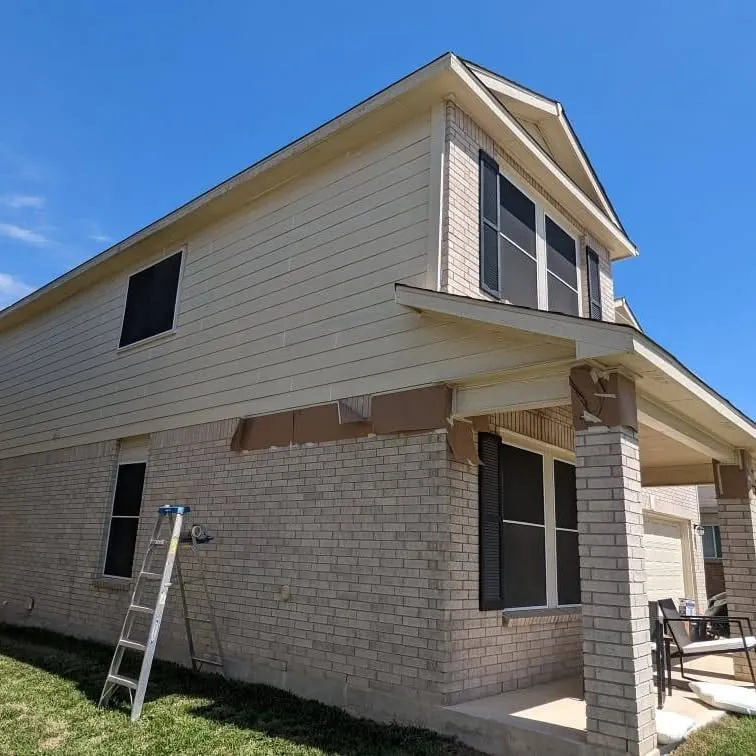
We don't publish a siding price, because the walls on every house are different. Every quote starts with a free inspection: we walk the outside of the house and look at the siding, trim, gutters and paint up close. Hail damage is usually worst on the side that faced the storm, so we check every wall, not just the front.
- The siding material, and whether a repair or a replacement makes more sense.
- How many walls need work, measured, with brick and openings taken out.
- Trim and gutters, if they are part of the job.
- What turns up under the old panels, and how damaged sheathing is handled.
- Matching. Older siding can be hard to match, and the exact profile on a house built twenty years ago may not be made anymore. That matters most when only a few panels are damaged.
You get a written quote after the inspection, and the job goes into a plain-English contract, so you know exactly what is being done to your house before work begins. Your call goes to Richard Puigdomenech, the owner.
We work in San Antonio, Converse, Schertz, Universal City and Laredo, 7 days a week. Siding fits naturally with a roof replacement, and painted siding can be brought back together with our exterior painting. To get a real fiber cement siding cost for your walls, start with a free inspection on our siding replacement and repair page.
FAQ
How much does fiber cement siding cost per square foot?
This Old House puts it at $5 to $14 per square foot of wall, installed, updated April 2026. Bob Vila's range is wider, $5 to $25, with premium panels at the top.
How much does fiber cement siding cost for a 2,000 square foot house?
It depends on the area of the walls that get siding, not the floor area. Two stories add wall area and brick reduces it. As an example, 1,800 square feet of siding at $5 to $14 a square foot is $9,000 to $25,200.
Is fiber cement siding more expensive than vinyl?
Yes. This Old House lists vinyl at $2.15 to $5.25 per square foot installed, against $5 to $14 for fiber cement. Fiber cement stands up to sun and impact better than vinyl, but it costs more and needs repainting.
What are the downsides of fiber cement siding?
Higher upfront cost, heavy boards that are harder to cut and install, repainting every 10 to 15 years, and moisture problems when it is installed badly. Boards can also crack if the foundation settles.
How long does fiber cement siding last?
Bob Vila says manufacturer warranties typically run 30 to 50 years. How long the paint lasts is a separate question; plan on a repaint every 10 to 15 years.
Can I replace only the damaged siding?
Often, when the damage is limited to a few boards on one wall. Older siding can be hard to match, so a repair on a wall that shows from the street sometimes means a fresh coat of paint on that wall too.